The Lansing School
The mountainous region of northwestern North Carolina, an area known until 1921 as the Lost Provinces, has a rich but little-discussed Appalachian heritage treasured by generations of longtime residents and newcomers alike. Cut off from the rest of North Carolina by rough terrain and lacking roads, the people of the Provinces learned self-reliance, depending on natural materials, the land, and raw ingenuity for everyday needs. They tended livestock through harsh winters, built weapons and tools in stone forges, and entertained themselves with dance and music from handmade instruments. The people of the Lost Provinces have an indispensable story, part of the mosaic of Appalachian cultural heritage that must be preserved.
A schoolhouse built by hand, and by neighbors
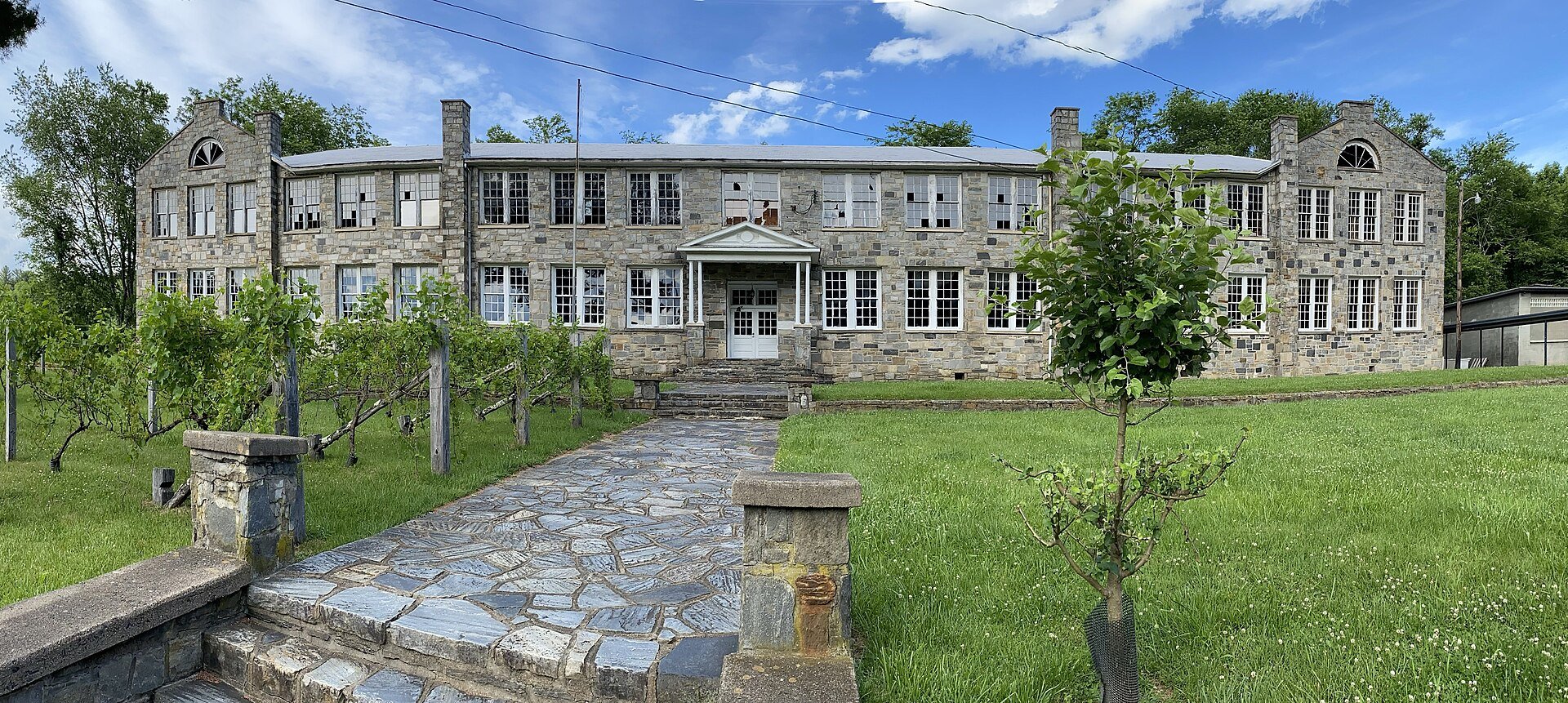
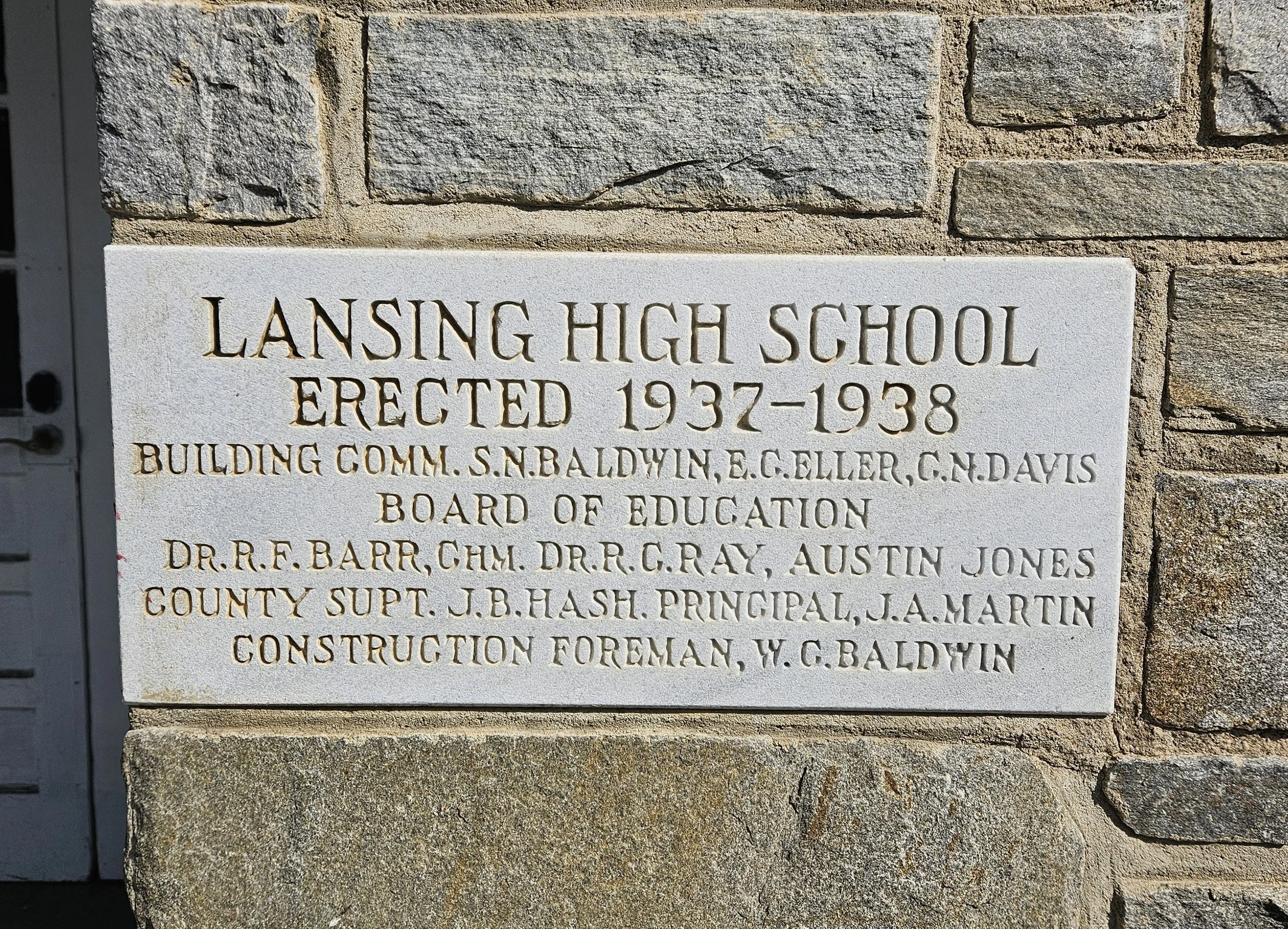
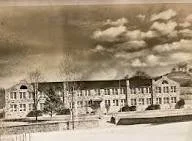
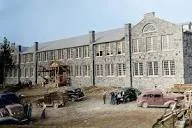
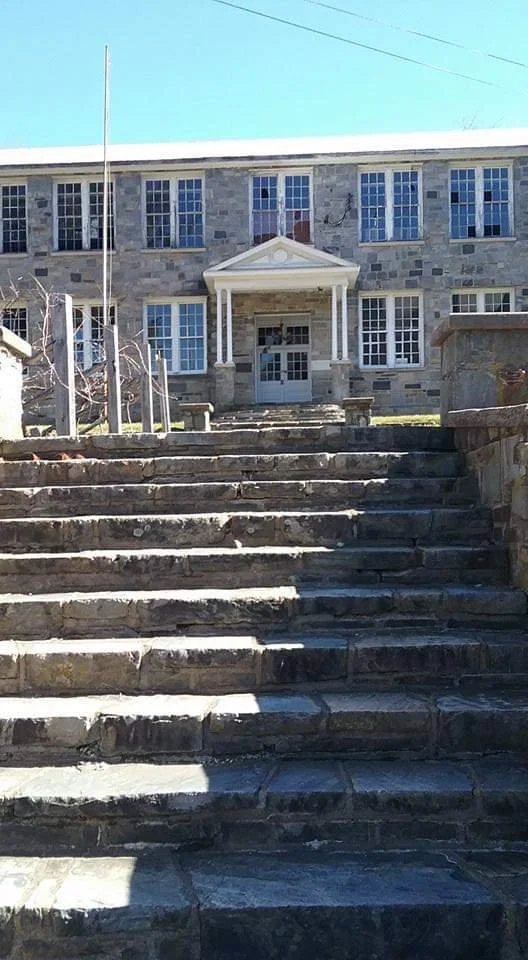
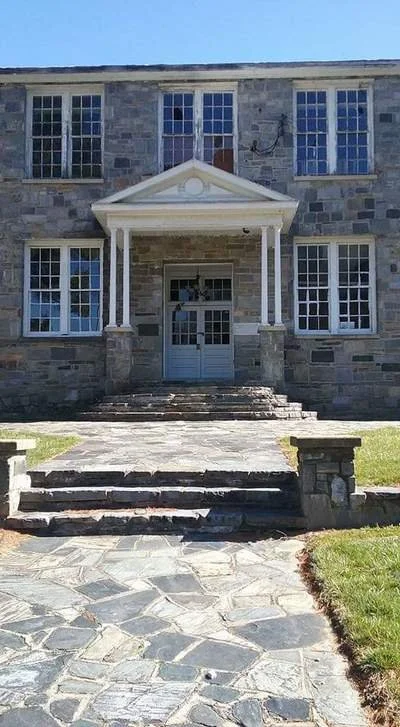
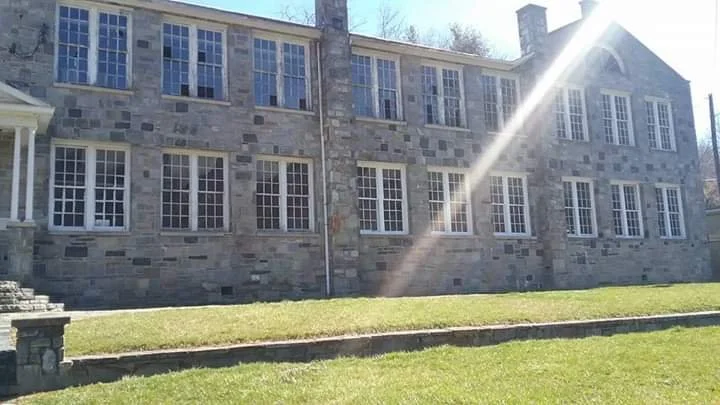
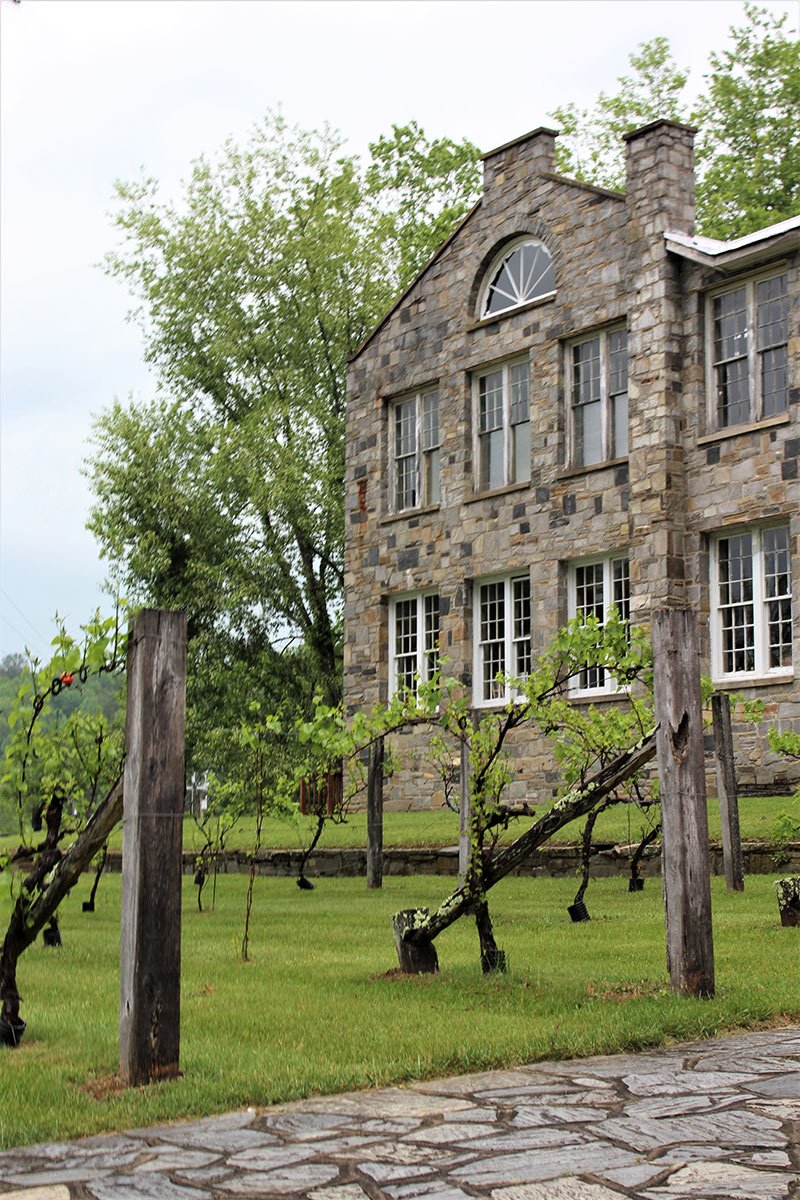
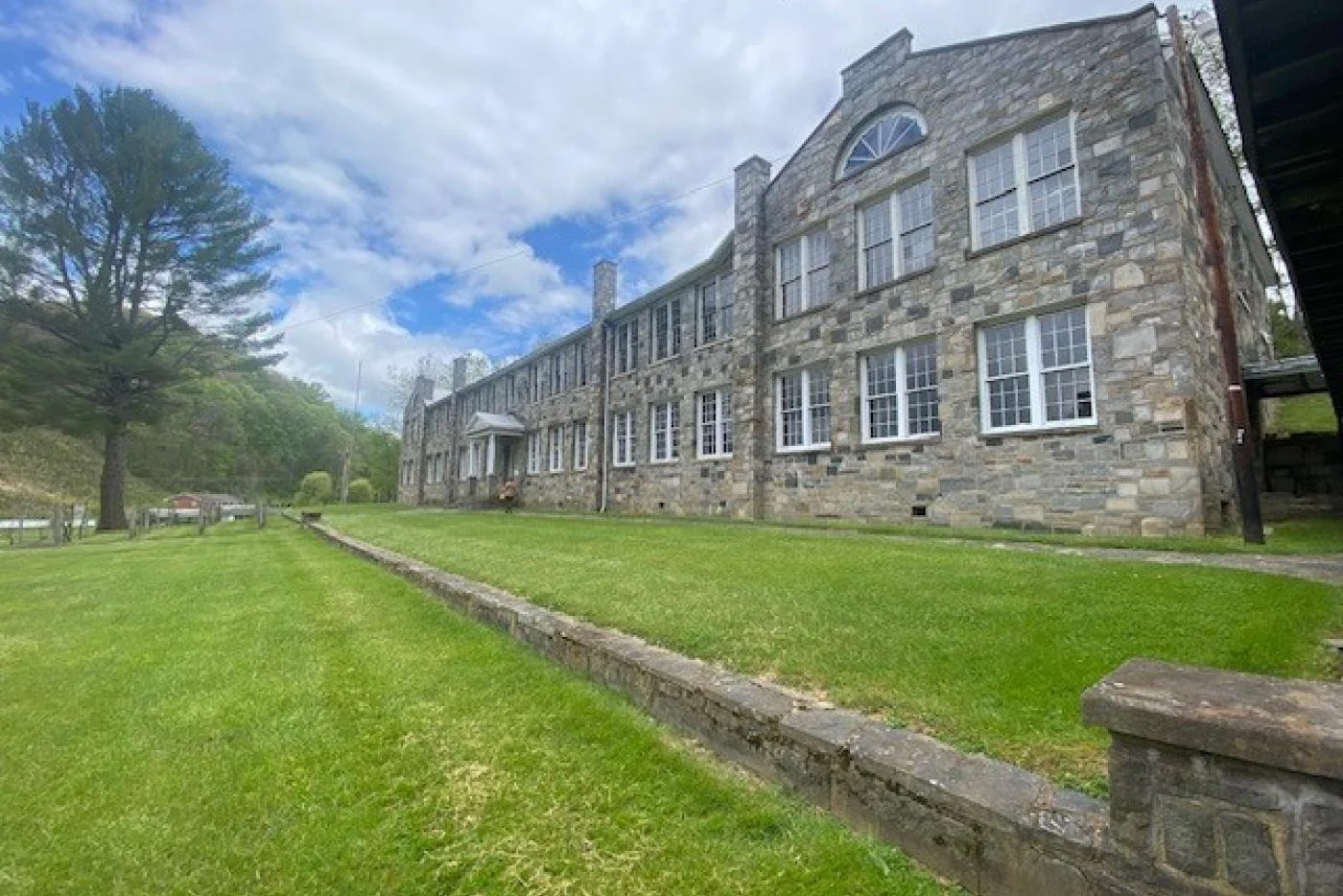
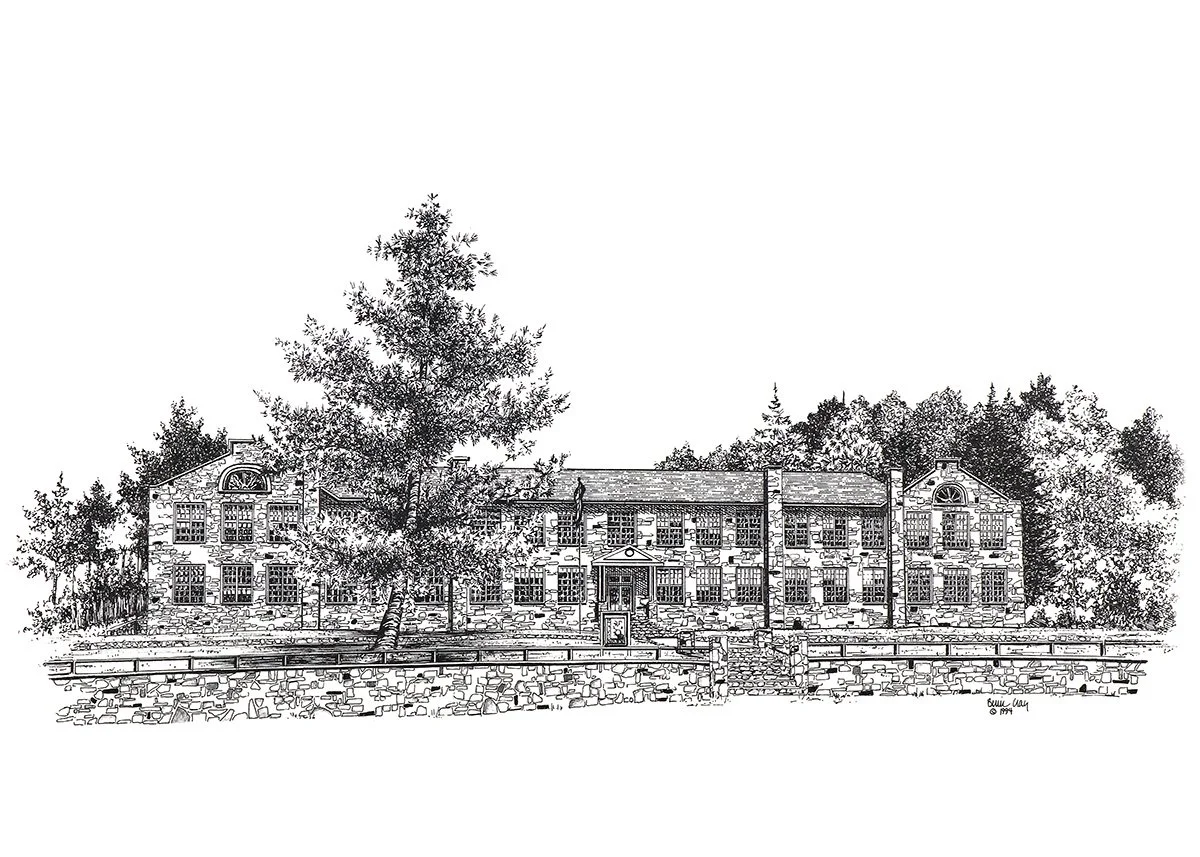
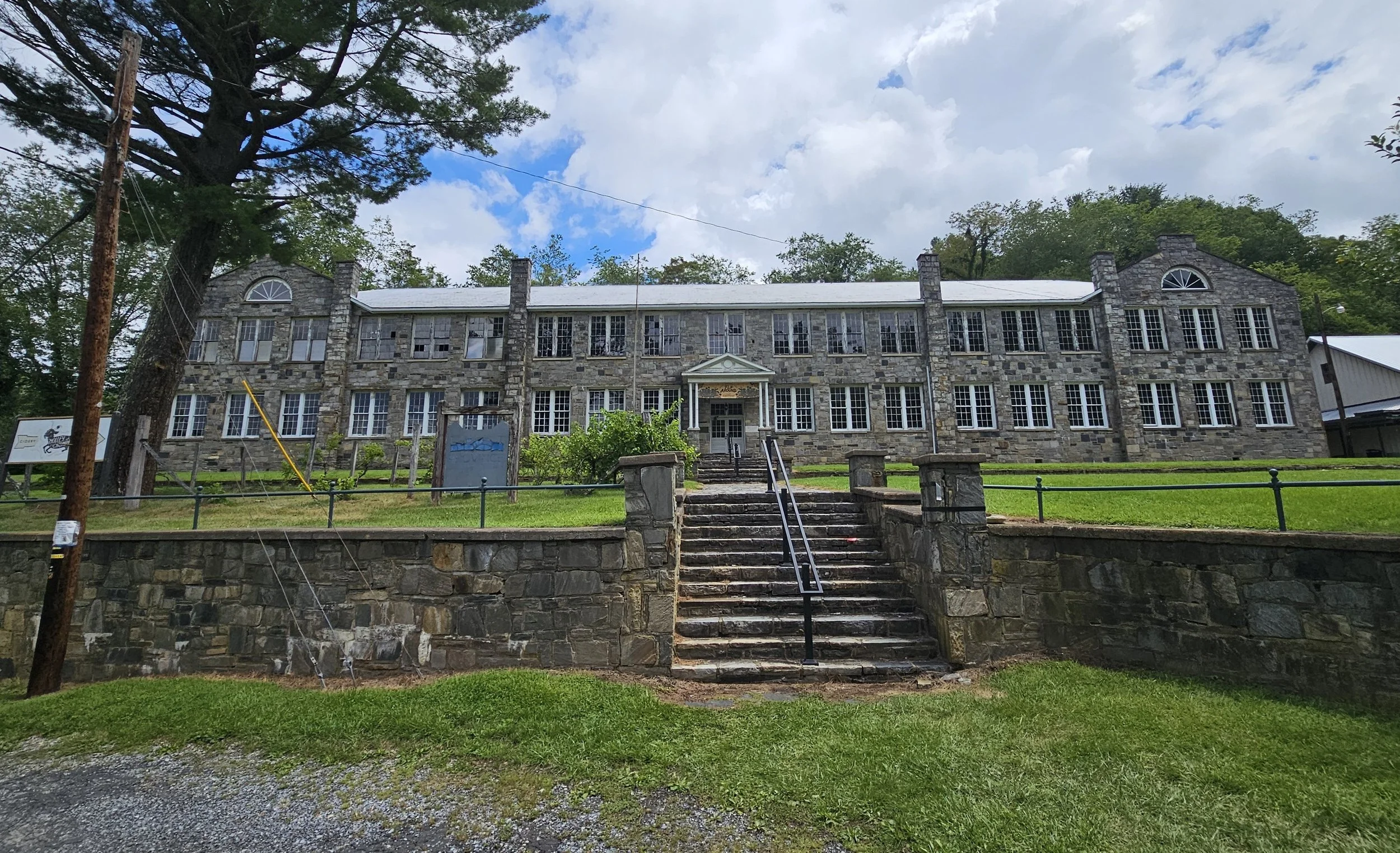
In 1937, crews working under the federal Works Progress Administration began raising a school on the east side of what is now NC 194. They built it from native granite, quarried and hauled locally, laid up in random courses so that no two stretches of wall are quite alike. The building opened in 1938.
It is two stories tall and nineteen bays wide, with a standing seam metal hipped roof broken by small gabled attic dormers. The detailing is Colonial Revival, but worn lightly: symmetry and proportion rather than ornament. A second building joined it on the property in the early 1950s, a two story, four bay brick structure that housed high school classrooms.
Seven decades of school days
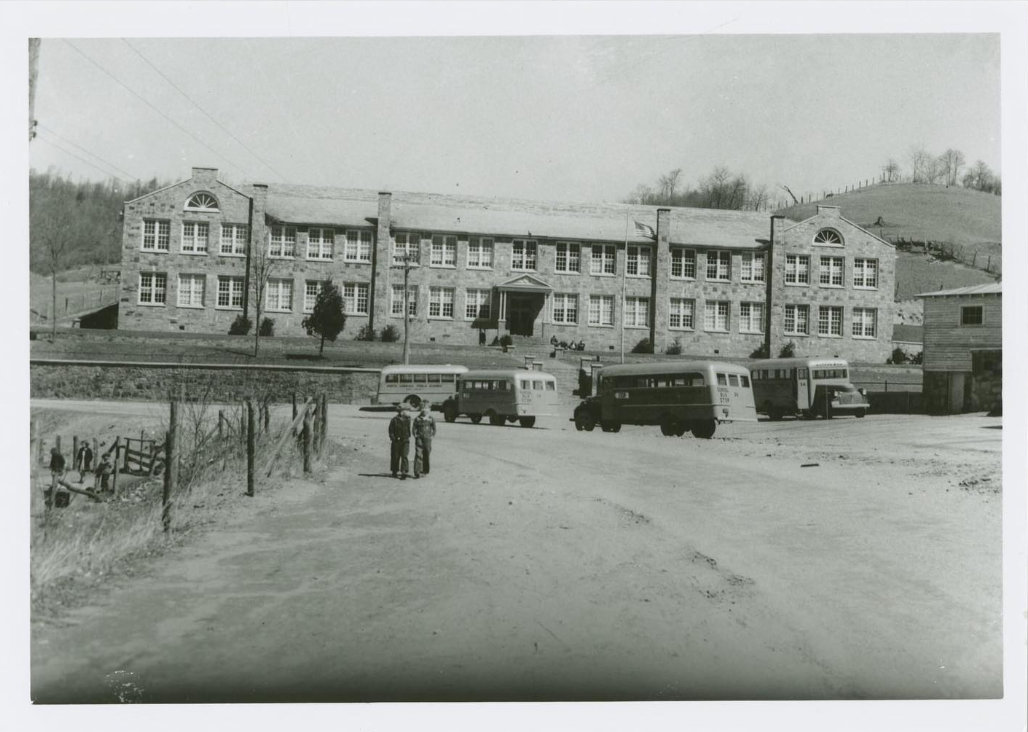
The Lansing School served as the community's grade school from the year it opened until 1992. For much of that time it was the largest school in Ashe County, and it remained so into the early 1970s. Generations of Lansing families passed through these halls.
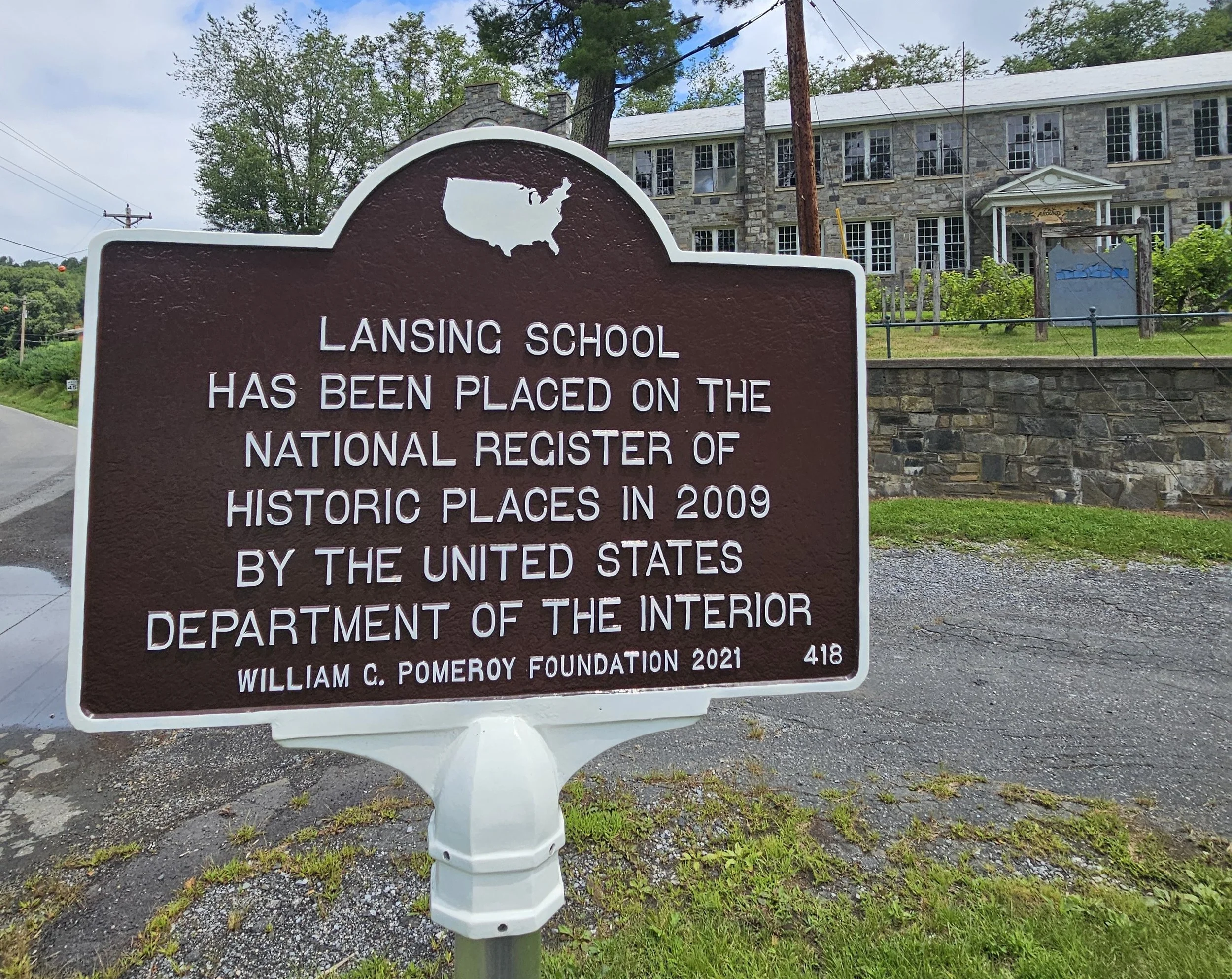
In January 2009, the Lansing School was listed on the National Register of Historic Places.
A second life
The Lost Province Center for Cultural Arts (LPA) was formed and received approval as a 501-c3 charitable organization in 2018. It is based in a historic property known as the Lansing School in Lansing, Ashe County, North Carolina. LPA purchased two of the original campus buildings in mid-2020: the stone schoolhouse built during the Works Progress Administration in 1937-38 (pictured above) and a brick classroom block built in 1952, with a vision to preserve, celebrate, and teach Southern Appalachian heritage, culture and skills; support the local community; and restore the historic campus buildings.
Although the COVID pandemic was at its height, LPA set up a clay studio and began offering workshops and classes. A wide selection of other workshops has followed. The LPA board implemented the following due diligence steps:
an Existing Conditions Report conducted by an architectural firm and structural engineers experienced in historic preservation
a Feasibility Determination conducted by Virginia Tech University’s Center for Economic and Community Engagement
a Strategic Plan developed with the University of North Carolina Business School in Chapel Hill
Then Hurricane Helene hit on September 27, 2024. The town center was inundated with up to eight feet of water. Within a day of the disaster LPA opened its campus as a disaster coordination and response center for the community. And for the next nine months normal activities, classes, fundraising and events were paused.
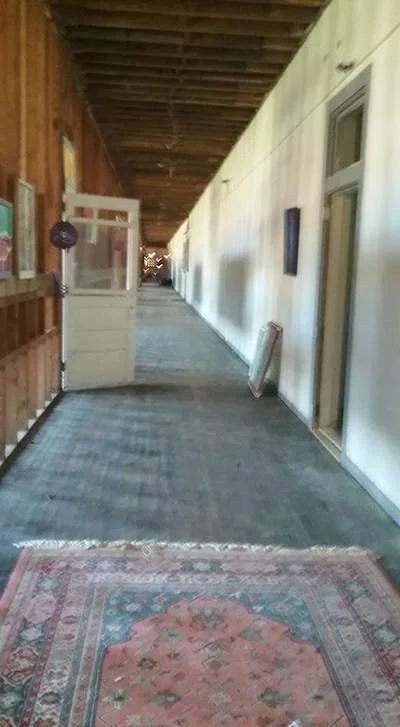
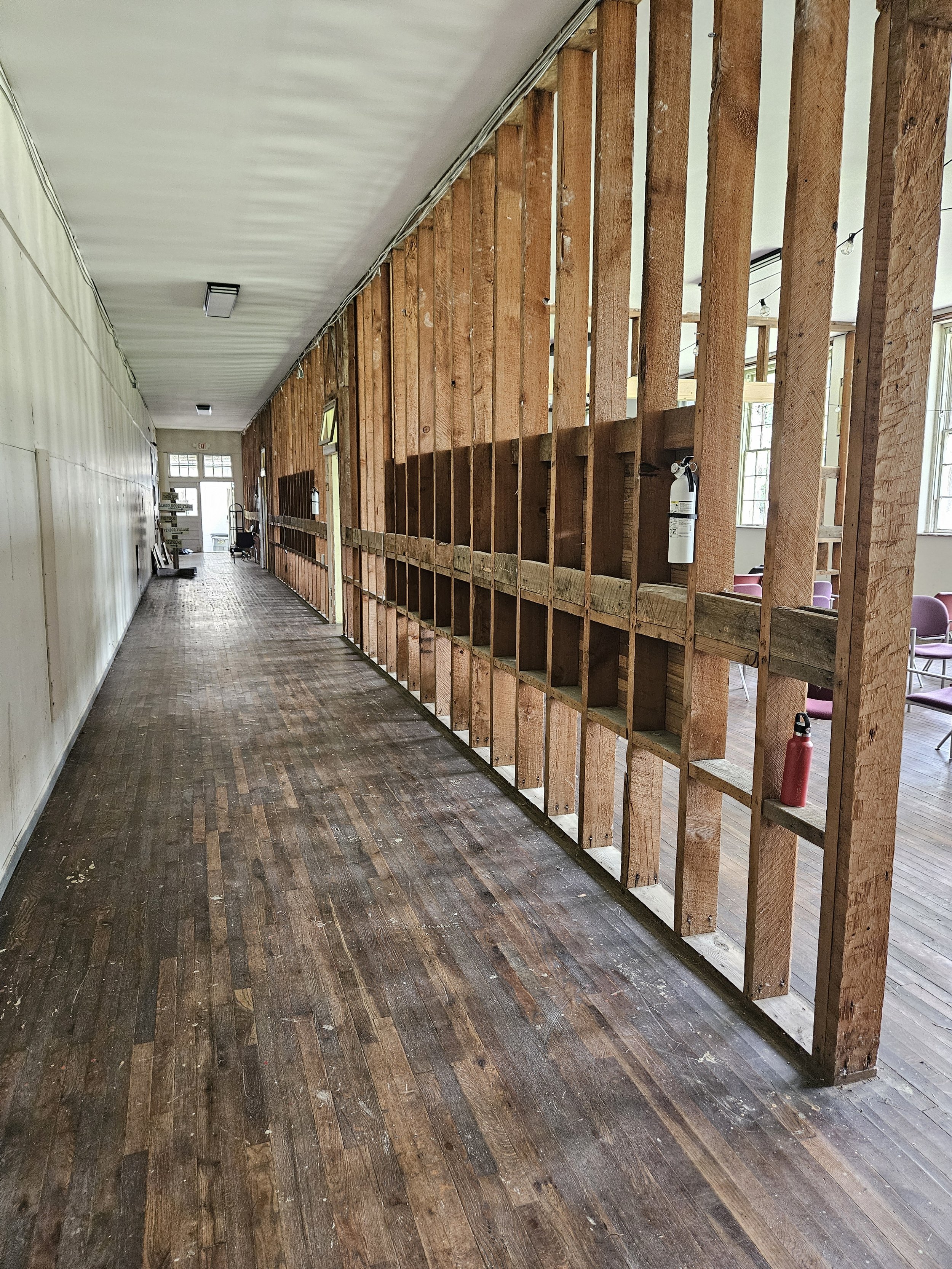
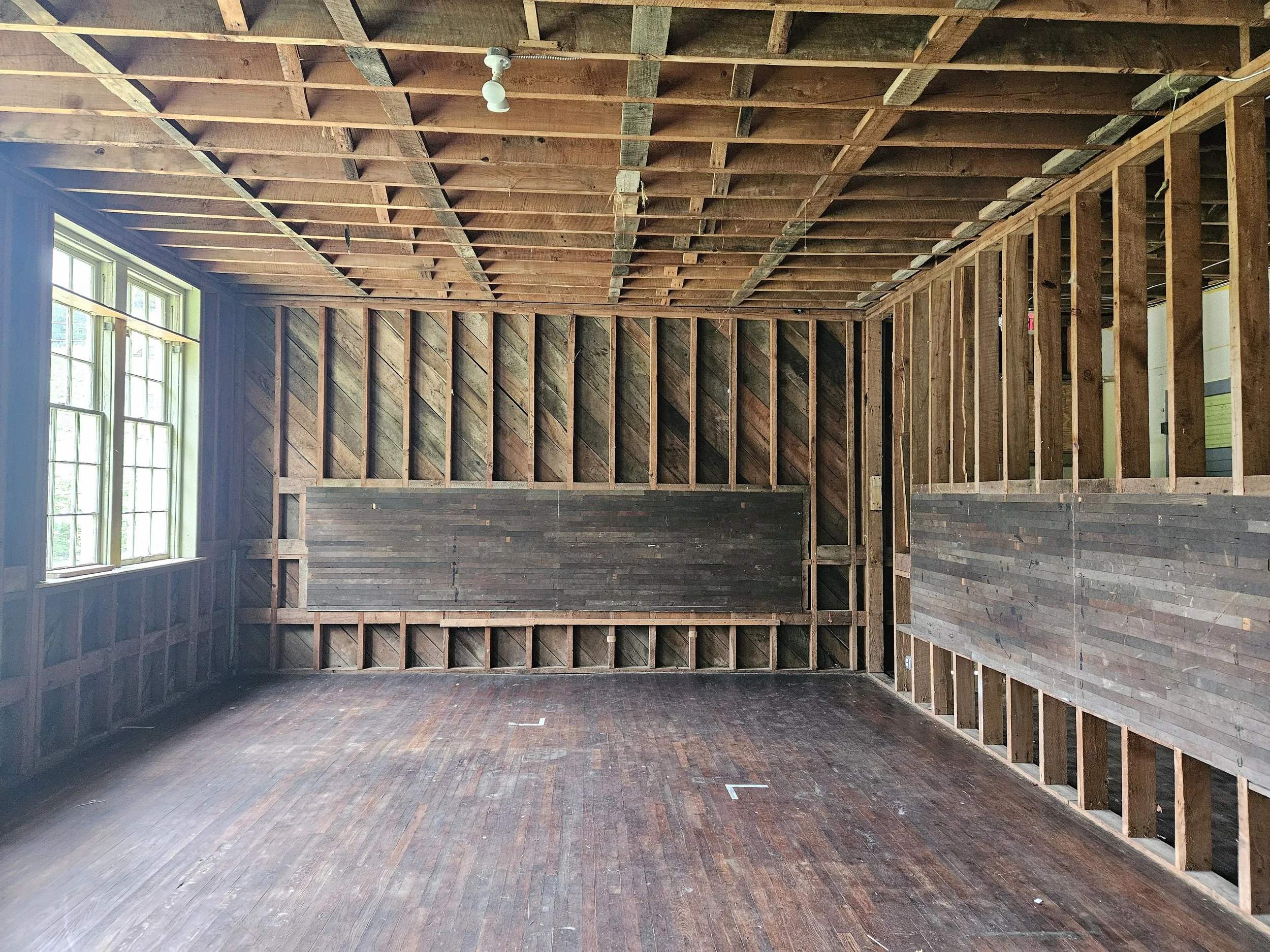
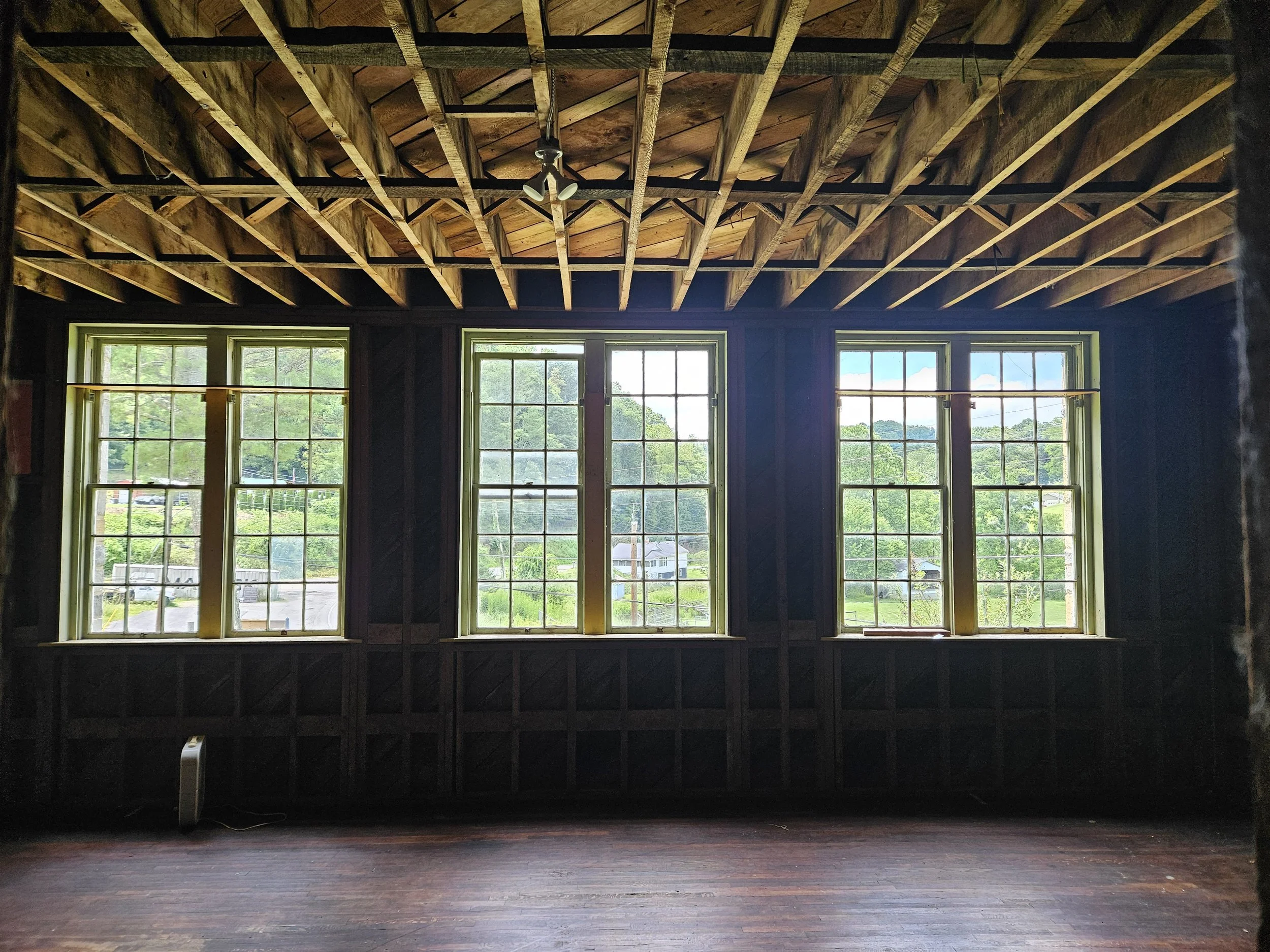
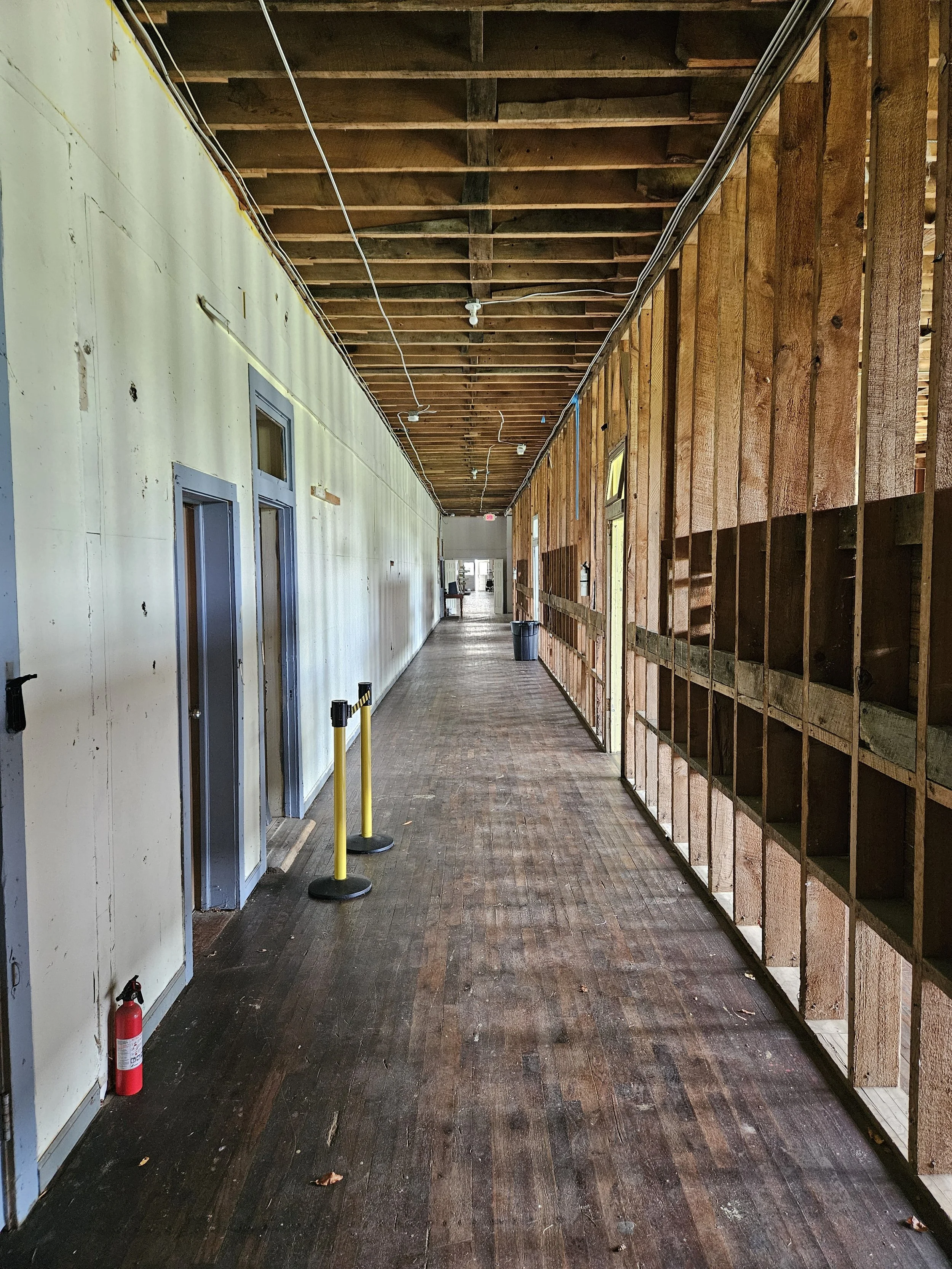
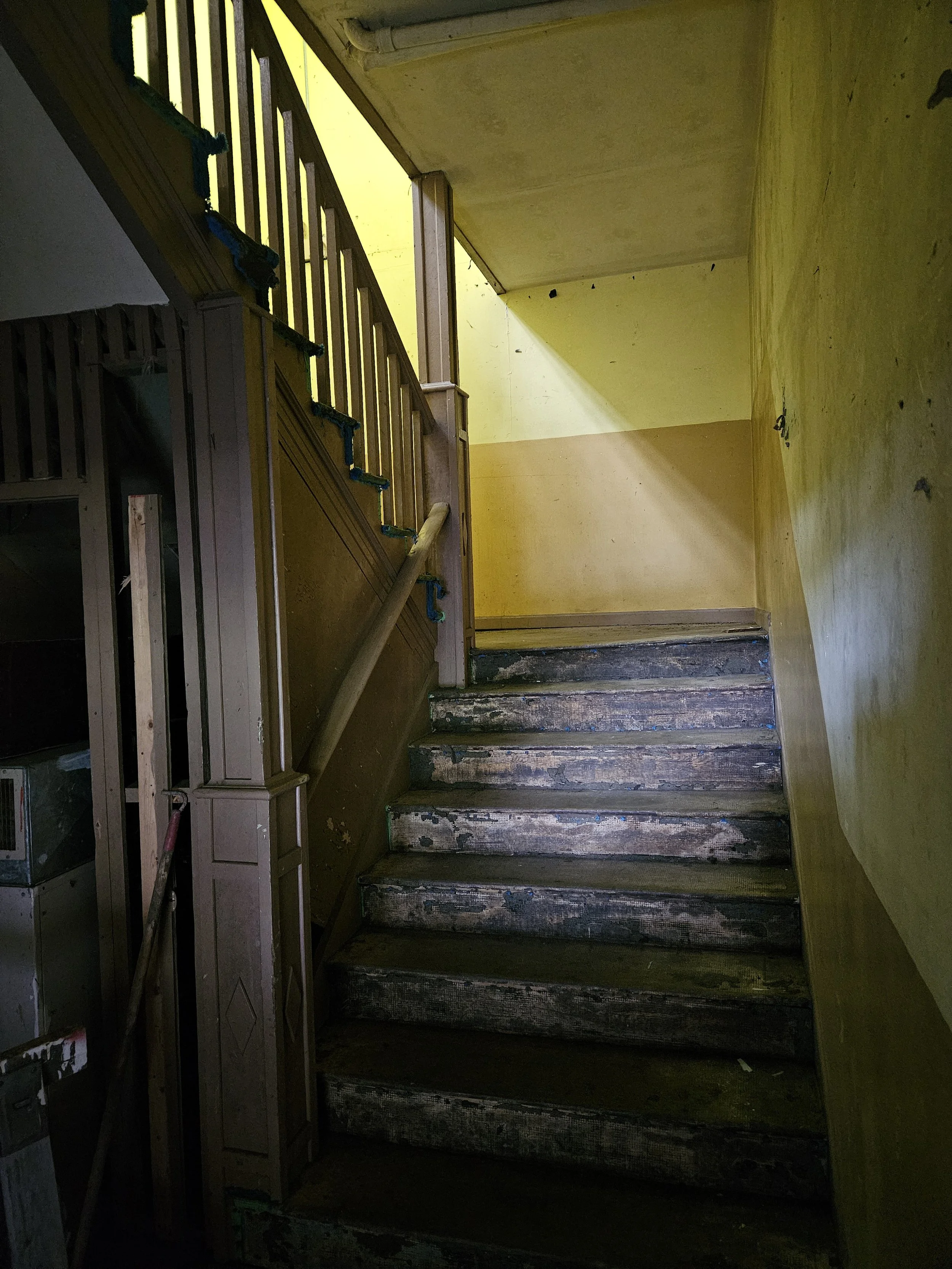
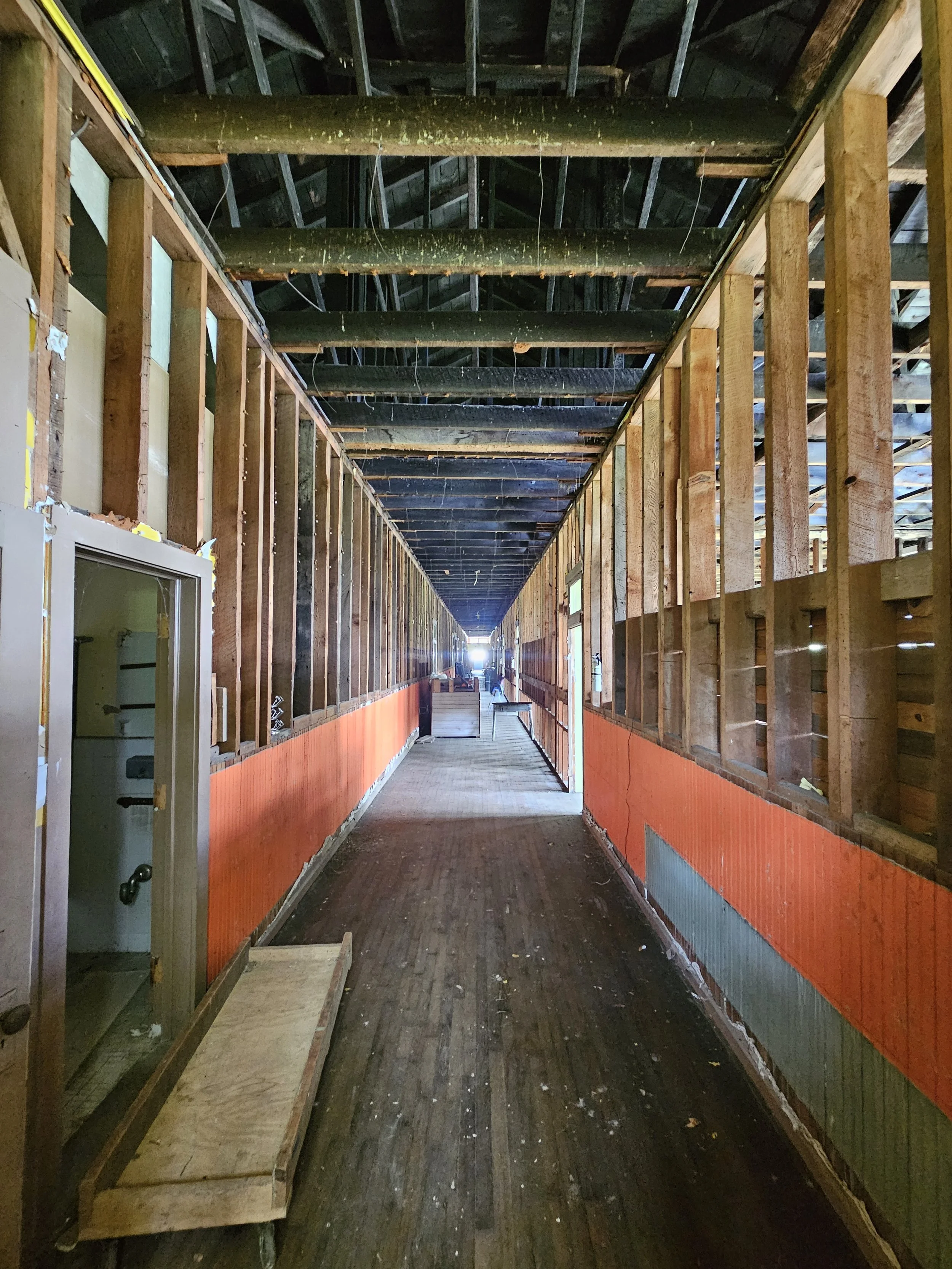
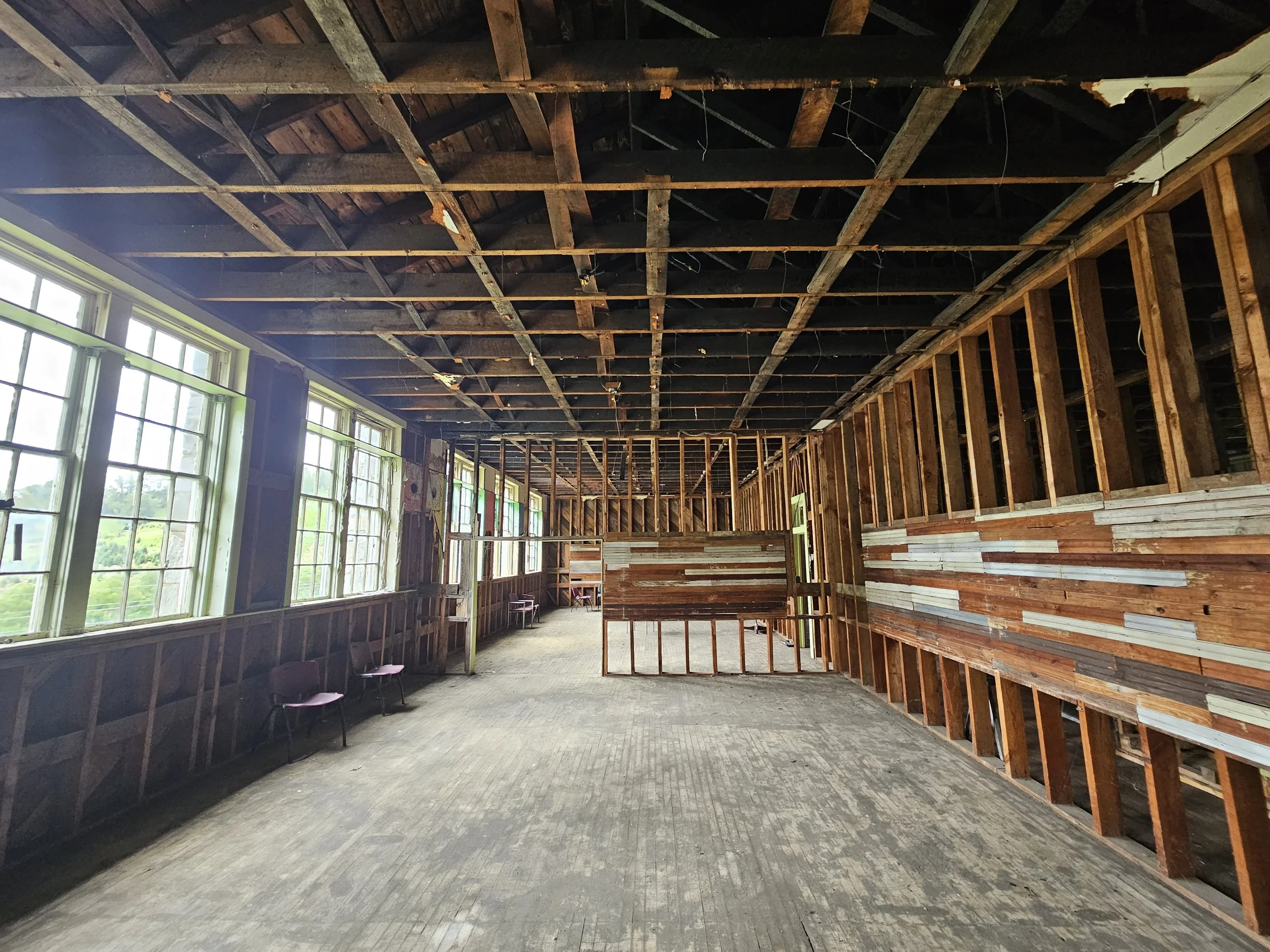
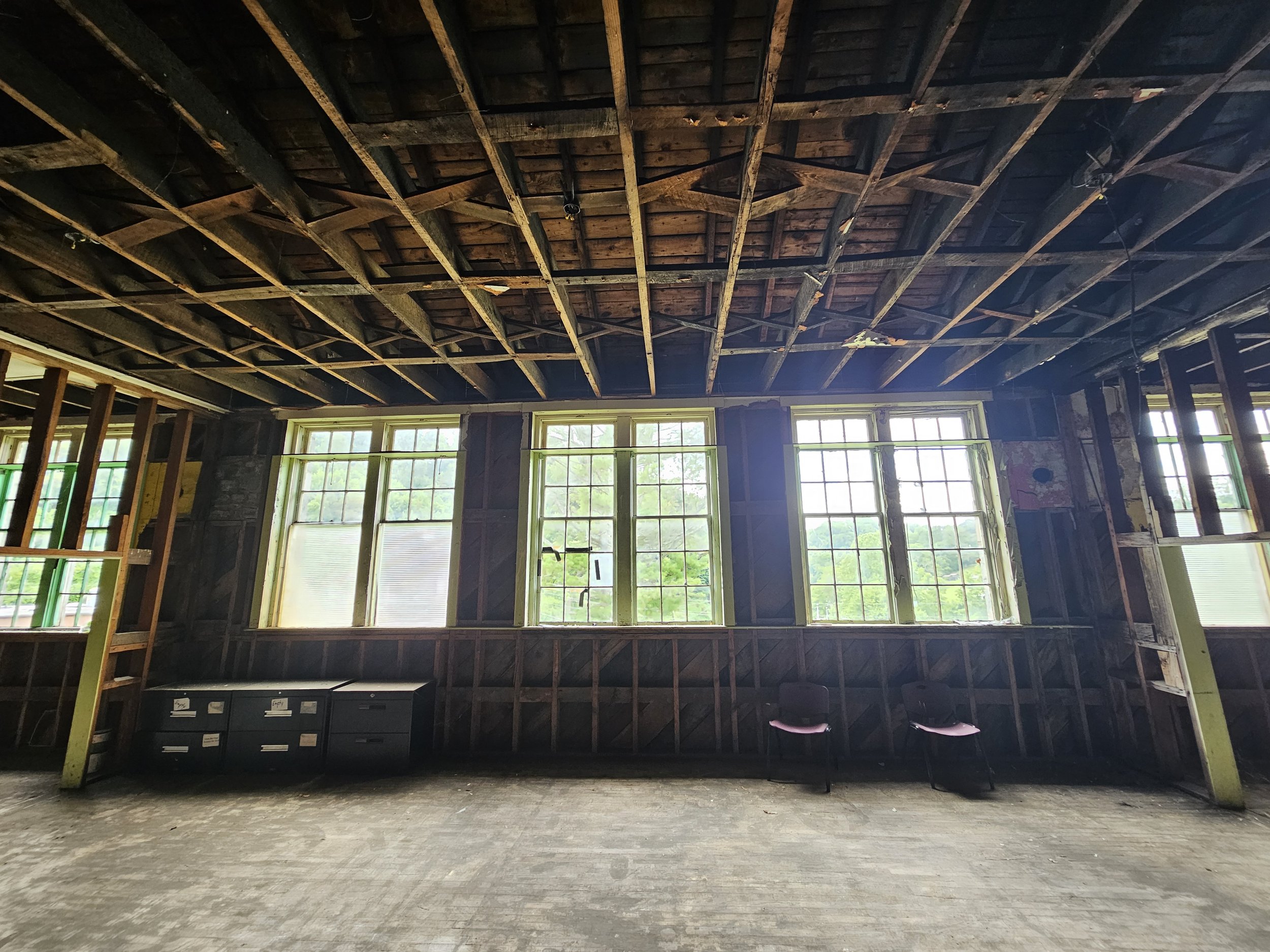
Today the work of restoration continues alongside the work the building was always meant to do. Studios for ceramics and fiber arts occupy former classrooms. Music, dance, and storytelling fill spaces that once held reading circles and recess bells. Artists, makers, and creative entrepreneurs rent studio and gathering space here. The school is teaching again. Our vision is straightforward. Celebrate and teach the culture and skills of Southern Appalachia. Revitalize the historic Lansing School. Support the community of Lansing.
The Gallery
The photographs below trace the building and grounds from the WPA years to the present: classrooms and class portraits, the stonework going up, the restoration underway, and the people who have filled these rooms across nearly ninety years.
If you have photographs, yearbooks, or memories of the Lansing School, we would love to hear from you. Write to info@lostprovincearts.org
Make a Donation
Every act of generosity - big or small - helps!
When you choose to give, you become part of something bigger, something powerful.
Thank you.